Friedrich Wilhelm Nietzsche was born on October 15, 1844, to a middle-class family with his father being the Lutheran Minister in the village of Röcken, close to Leipzig. His father and his brother died when he was only 5 years old and was the only male in his household. Shortly after these losses, the family moved to an urban neighborhood in Naumburg, Saxony. In his early teens, he joined the prestigious Christian school called Schulpforta where he received education in Theology, Humanities. While studying he left a good impression on his teachers.
:max_bytes(150000):strip_icc():format(webp)/nietzscheportrait-a6cfe34a104349e5b59991a1c94ea482.jpg) Nietzsche emphasised will and power in his works.
Nietzsche emphasised will and power in his works.
In 1864 he entered the University of Bonn and shortly after his entry, he focused his academic life on Philology where he wanted to study classical languages. His contribution and curiosity towards ancient texts (mainly ancient Greek) drew the attention of Professor Ritschl and he was praised highly of him during that period. With all the praise he became semi-famous in the academic scene. He, later on, entered the University of Basel in Switzerland and became the Professor of Greek Language and Literature just at 24 years old.
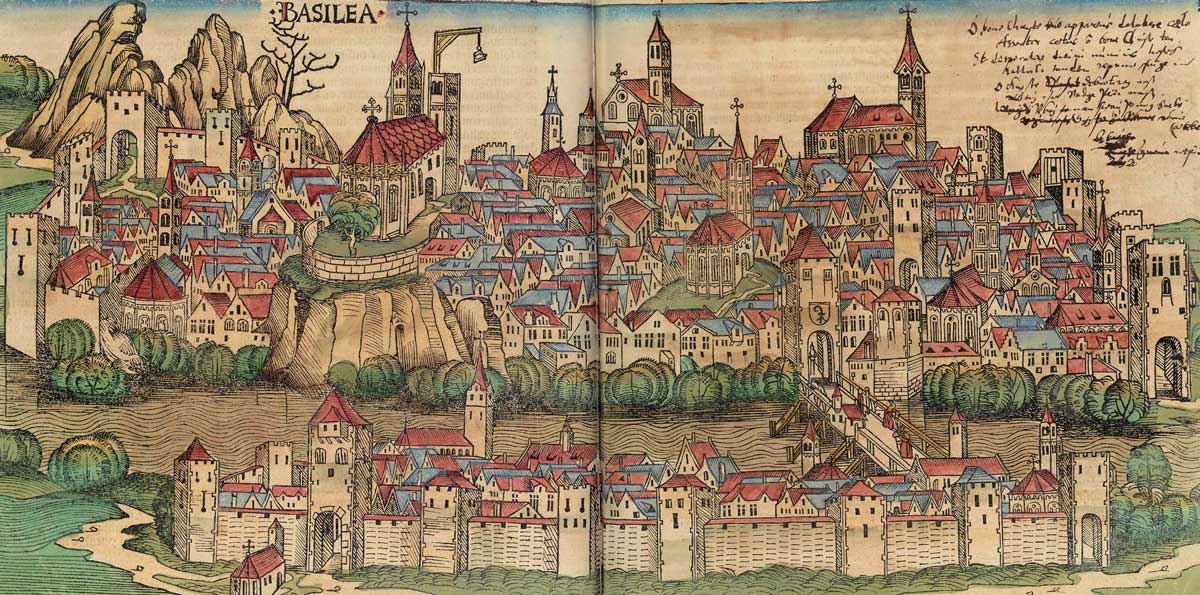 Depiction of Basel in 1493.
But he quickly lost interest in becoming an academician and later on moved to Sils Maria on the outskirts of the Swiss Alps and lived relatively peacefully while working on his sensational philosophic ideas. He published The Birth of Tragedy, Human All to Human, The Gay Science, Thus Spoke Zarathustra, and many more where he talked in great depth about his philosophy. At that point in his life, he was having difficulties with his family, was failing relationships with women and his books weren't selling as expected. And when he was mid 40's he had a mental breakdown and when he was trailing on the street he saw a horse getting beaten by its driver and quickly embraced the horse shouting "I understand you". Nietzsche never recovered from that breakdown.
 Nietzsche never really recovered from his mental breakdown.
Despite being depressed and having constant breakdowns, Nietzsche's philosophy was full of heroism and self-improvement. His ideal type of human was called an ÜBERMENSCH(superman) who overcomes difficulties and accepts what life throws at them. His work emphasized on getting people to become who they are in life. In order to achieve that, we need to implement 4 main recommendations.
Four main recommendations of Nietzsche
The first one of the recommendations is owning up to envy whereas major Abrahamic religions teach envy as something to be feel ashamed of and it is associated with evil. However, to Nietzsche, being envious as long as we utilize it to make our life better than today. Every person should be seen as a goal rather than a pure object that makes us jealous. People who cross the boundaries of success are hinting us who we might become one day. This approach basically tells us that we should face up our true desires and resist them and only then if we encounter failure we should mourn it. Übermensch utilizes that principle in his/her life.
 Nietzsche's idea of superman was not as hollywood depicted but was much more subtle and
interesting man.(Photo by Mehdi
MeSSrro on Unsplash
)
Nietzsche's idea of superman was not as hollywood depicted but was much more subtle and
interesting man.(Photo by Mehdi
MeSSrro on Unsplash
)
His second recommendation was "Don't be a Christian". In Abrahamic religions, envy is associated with evil and emerged from the mindset of timid slaves that lacked the courage to get what they wanted. Those wanted entities could be money, fame, power, and women. Being a Christian, one was always clung to a philosophy that embraces cowardice. This was called slave morality in Nietzsche's terms. Religious people deemed these values as evil and embraced a hypocritical ideology and condemned what they always wanted. So in other words, sexlessness, and poverty became some sort of purity and goodness. Therefore Christianity is a giant cage for people who are in resentful denial.
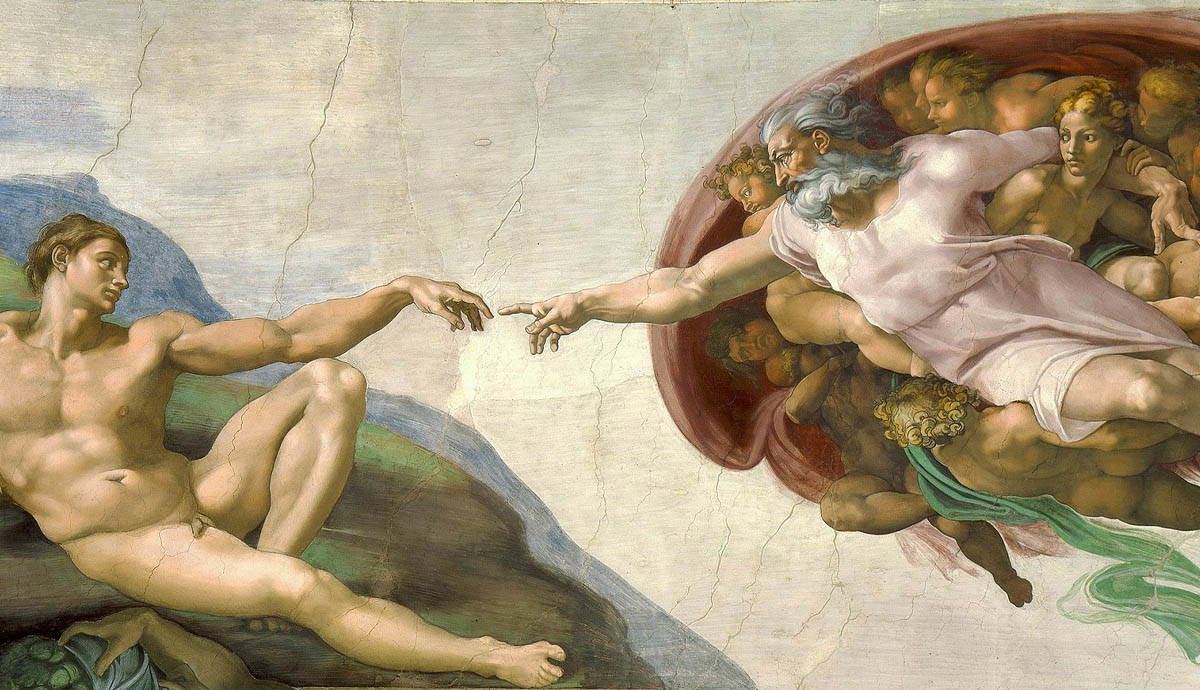 To Nietzsche being a christian is accepting a hypocritical creed.
The third one on the list is "Never drink alcohol." Nietzsche himself was quite an interesting man as he only drank water. He makes the argument that narcotic substances and mind-numbing ideologies are the most dangerous to modern civilizations as it impedes the thinking process and numb people physiologically and mentally. Nietzsche hated the idea of numbing pain and reassurance of ideas at the expense of facing the truths and changing our lives for the better. As you can tell by these recommendations, he was an anti-conformist from the heart. As he calls it "The secret of a fulfilled life is: live dangerously."
 "Taking action and facing problems head-on is the correct approach to life."
The last recommendation is "God is dead". His statement is not some sort of a celebration call, and the decrease in belief in higher order is not anything to cheer about. He understood that religion is false however, he also acknowledged that the belief helps us cope with the distress of life. This kind of deterioration of belief should be replaced by culture and fine arts in the form of art, music etc. For Nietzsche, philosophers should be on the fore front in handling great developments in social life and guide people when transitioning from old to the new age.
Source section
- Magnus, B. (2023) Friedrich Nietzsche, Encyclopædia Britannica. Encyclopædia Britannica, inc. Available at: https://www.britannica.com/biography/Friedrich-Nietzsche (Accessed: April 25, 2023).
- Mambrol, N. (2019) The philosophy of Friedrich Nietzsche, Literary Theory and Criticism. Available at: https://literariness.org/2019/04/18/the-philosophy-of-friedrich-nietzsche/ (Accessed: April 25, 2023).
- May-Hobbs, M. (2023) Nietzsche: A guide to his most famous works and ideas, TheCollector. Available at: https://www.thecollector.com/nietzsche-famous-works-and-ideas/ (Accessed: April 25, 2023).
- Rothfeld, B. (2018) How to live better, according to Nietzsche, The Atlantic. Atlantic Media Company. Available at: https://www.theatlantic.com/magazine/archive/2018/10/nietzsches-guide-to-better-living/568375/ (Accessed: April 25, 2023).
- Töniges, S. (2020) Nietzsche: The thinker who exploded the philosophy world – DW – 08/25/2020, dw.com. Deutsche Welle. Available at: https://www.dw.com/en/friedrich-nietzsche-the-dynamite-german-philosopher/a-54691125 (Accessed: April 25, 2023).