Baruch Spinoza (1632-1677) was a Dutch philosopher with a Portuguese-Jewish descendant. In this article, I want to tell a bit about Spinoza's philosophy and his interactions with the 17th-century European community.
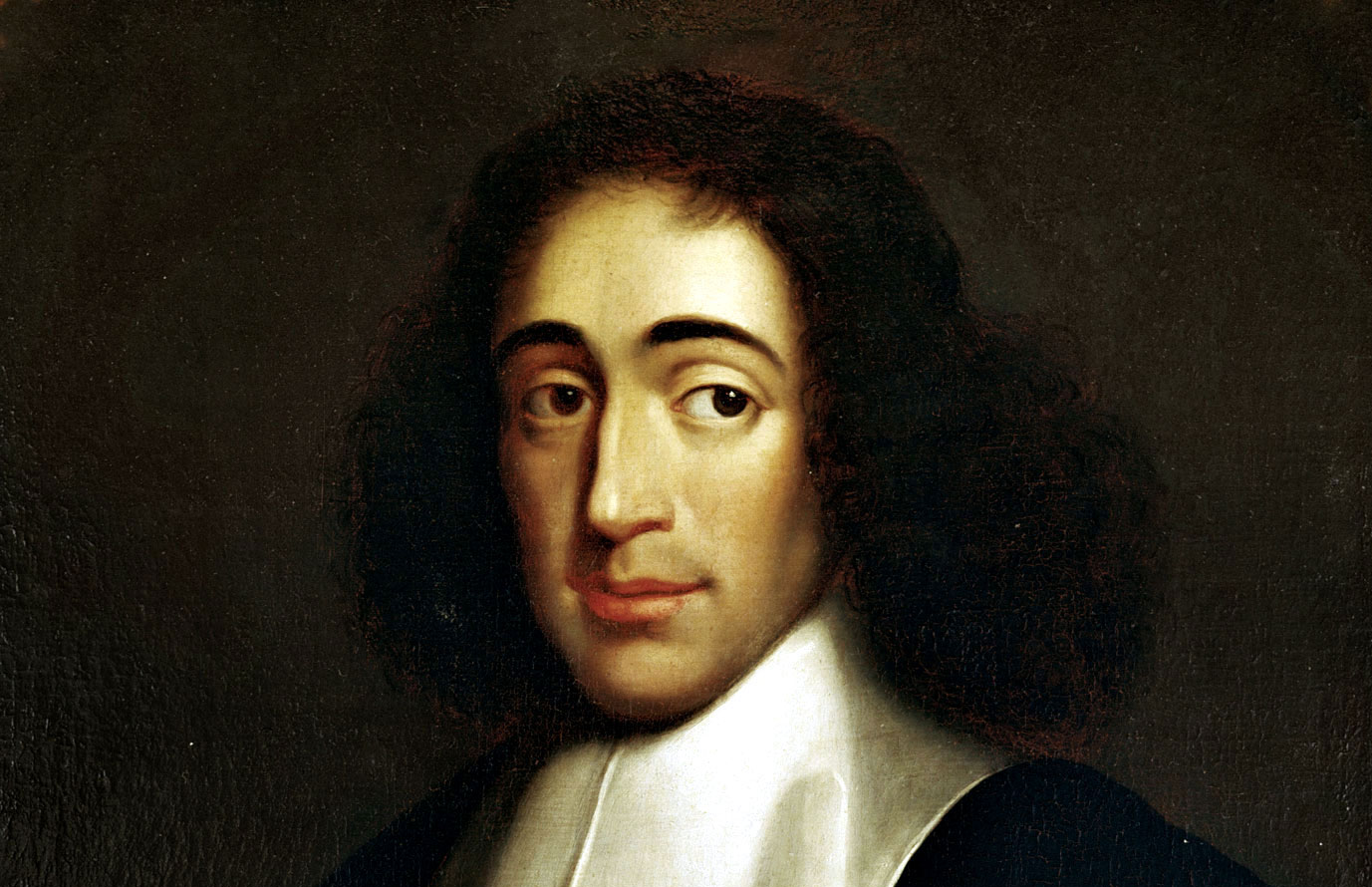 Portrait of Spinoza
In his teens and early adult life, he met with plenty of people from diverse backgrounds through his time selling tropical fruit. His curiosity turned into questioning the accuracy of the Judaic religions when he started to attract attention as a heretic. This curiosity later grew when he read Pre-Adamitae (Man Before Adam) by Isaac La Peyrère. It challenged the ideas of the Catholic Church and consequently the whole Christian world by questioning the accuracy of the Bible and he supported his idea by suggesting the spread of human beings all over the world implies the nonexistence of Adam and Eve and concluded his remark by saying Bible is the history of Jews and their surrounding communities and should not be taken into account when examining the history of the world.
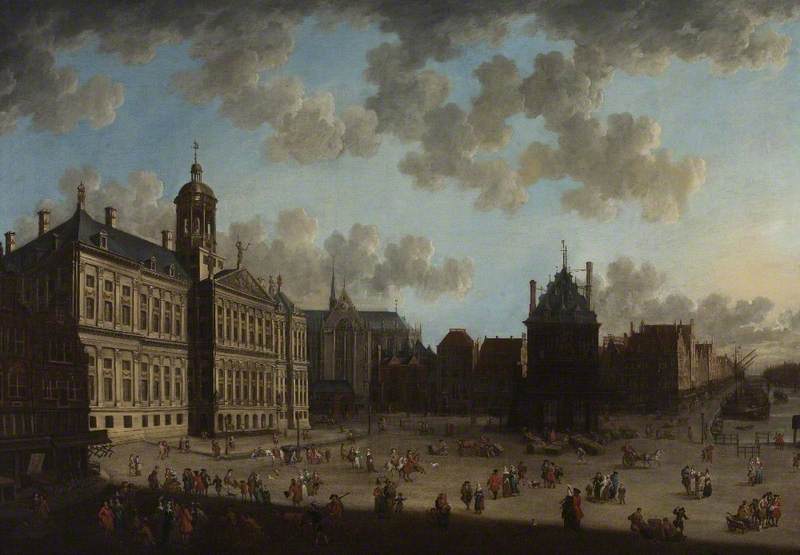 17th-century Amsterdam was a metropolitan heart of Europe (Photo credit: Victoria Art
Gallery)
17th-century Amsterdam was a metropolitan heart of Europe (Photo credit: Victoria Art
Gallery)
In light of these events, he was formally excommunicated in 1656, and harsh rules were applied to anyone who dared to have any relationship with him. Despite this, his community offered help and was reluctant about his excommunication. A short time after he changed his name from Baruch to the Latin word Benedictus, both of which have the meaning of "blessed".During his time in Amsterdam, he had met with members of Collegiants and Quakers (religious groups in Amsterdam that resisted any formal creed and practice.) and joined their discord on philosophy, and formulated some parts of his philosophy from their doctrine.
"Although I have been educated from boyhood in the accepted beliefs concerning Scripture, I have felt bound in the end to embrace other views"
-Baruch Spinoza
:max_bytes(150000):strip_icc():format(webp)/QuakersBeliefs-72882874-594a9d083df78c537bac9fed.jpg) Quakers were somewhat popular during the 17th-century
Quakers were somewhat popular during the 17th-century
His philosophy in simple terms moves away religion from superstition, formal creeds, and practices. According to this belief only accepted scientific truths and facts were the objective truth. God is not a person who stands outside of nature; consequently, there is no one to hear our prayers to create miracle events or punish us for our sins beings aim, and most importantly, there is no afterlife. Despite all these claims he is not an atheist, quite the opposite he remained a persistent defender of God. Spinoza's God is the nature, existence, and the very fabric of the Universe and everything within the scope of imagination and therefore cannot be individuated.
 Ethica today is a popular philosophical book
Humans try to understand how and why the universe works the way it does and accept the things that come from scientific pursuits rather than whine, pray, or protest the facts and events.
"Whoever loves god cannot strive that God should love him in return"
To understand, the quote suggests that only a narcissistic and egocentric person believes in God and would take an interest in bending the rules of the Universe to benefit a single person. This philosophy was influenced heavily by Stoic philosophy which argued that the protest against how things are is not a wise action but making continuous attempts to understand the world and only then bow down to the Universe. The last part of Spinoza's philosophy is, how do you understand the concept of God? Well to understand God, one must understand how the Universe and life work through natural sciences, psychology, and philosophy. One of the most critical aspects of this is it suggests we can exceed to a divine eternal perspective through studying the Universe.
 As humans, we should strive to achieve scientific feats (Bill Ingalls/NASA, via Agence
France-Presse — Getty Images)
As humans, we should strive to achieve scientific feats (Bill Ingalls/NASA, via Agence
France-Presse — Getty Images)
According to Spinoza, there are two ways of looking at life. We can either act egoistically from our own perspective as he called it Sub Specie Durationis (under the aspect of time) or we can see things eternally Sub Specie Aeternitatis (under the aspect of eternity). Our life as we experience with our bones and flesh may pull us towards time bound view (Sub Specie Durationis) but our reason and intelligence can give us a unique perspective it can quite literally allow us to participate in eternal royalty (Sub Specie Aeternitatis)
Why was Spinoza not popular?
The question then becomes why was Spinoza not popular for his beliefs. His famous book Ethica (Ethics) is one of the world's most beautiful books. It serves as a calming perspective regarding life. It replaces the all-powerful and sometimes angry God figure with a wise and consoling pantheistic type of God. The reason it is not popular is that religion includes far more emotion, belief, fear, and simply tradition. People stick to their religious beliefs because they like traditional values and regular events. Ethica is a well-structured book but it alone cannot contribute to people changing their beliefs. But in today's world even if Ethica is not known by a lot. Its ideas are more or less the cornerstone of western religious beliefs.
Source section
- BBC. (2009, July 3). Religions - christianity: Quakers. BBC. Retrieved March 28, 2023, from bbc.co.uk/religion/religions/christianity/subdivisions/quakers_1.shtml
- Dutton, B. (n.d.). Internet encyclopedia of philosophy. Retrieved March 28, 2023, from https://iep.utm.edu/spinoza/
- Encyclopaedia Britannica, T. E. of. (2021). Quaker. Encyclopædia Britannica. Retrieved March 28, 2023, from https://www.britannica.com/topic/Quaker
- Encyclopædia Britannica, inc. (n.d.). Dutch civilization in the Golden Age (1609–1713). Encyclopædia Britannica. Retrieved March 28, 2023, from https://www.britannica.com/place/Netherlands/Dutch-civilization-in-the-Golden-Age-1609-1713
- Hopkin, R. (2023, April 1). Benedict de Spinoza. Encyclopædia Britannica. Retrieved March 28, 2023, from https://www.britannica.com/biography/Benedict-de-Spinoza
- Nadler, S. (2020, April 16). Baruch Spinoza. Stanford Encyclopedia of Philosophy. Retrieved March 28, 2023, from https://plato.stanford.edu/entries/spinoza/
- The Dutch Golden Age - a new breakthrough for Dutch art after the ... (n.d.). Retrieved March 28, 2023, from https://artpaintingartist.org/dutch-golden-age-new-breakthrough-dutch-art-renaissance/